


In 2018 road transport represented a huge part of all goods movements in Europe. Every year road freight transport makes us spend billions of euros on health. Any solution capable of limiting it could therefore generate a consistent decrease in mortality due to air pollution. Nakpack is trying to help on that and has found a way to save the environment, every year, more than 114 million grams of CO2.
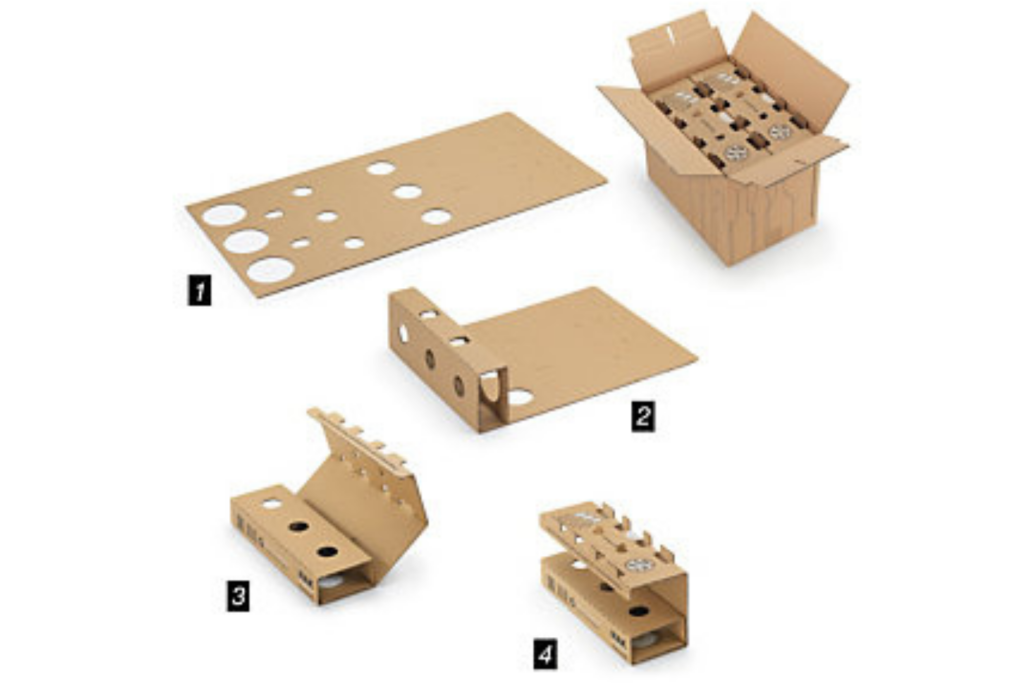
It does this thanks to its totally recyclable and easily stowed bottle transportation packaging in heavy vehicles. In fact, they occupy only 20% of the space compared to those of their competitors. To meet the need to safely pack fragile products such as glass bottles of wine, beer and olive oil, the Nakpack team has devised a bottle boxes packaging system that does not use polystyrene wine packaging, a material that is widespread but not recyclable and cumbersome.
What is NakPack?
Nakpack is in fact the system designed and developed specifically to meet the need to safely pack fragile products such as glass bottles, without the use of polystyrene, a material that is not recyclable and bulky, which is instead used by the majority of competitors. The company guarantees maximum safety in transport as each protective bottle packaging is subjected to the rigid UPS shipment approval, a test that is passed thanks to a solid architecture, which helps the modules to absorb even the most difficult falls.
“Last year we made 4.752.000 bottles traveling, with a saving for the environment of over 114 million grams of CO2. This is because in a classic van, our competitors are only traveling 864 cellars of 6 bottles each, while we, thanks to the use of bottle packaging made of cellulose, less bulky than those in polystyrene, in the same space we travel 3920 complete packages of 6 bottles each.
Without forgetting that polystyrene has a certain amount of CO2 incorporated in the material, which is then released into the environment, while cellulose does not present any of these problems.Angelo Bandinu - CEO of NakPack Tweet
Share this article
Did you like this article?Share it now!
Credit photo Magda Ehlers


